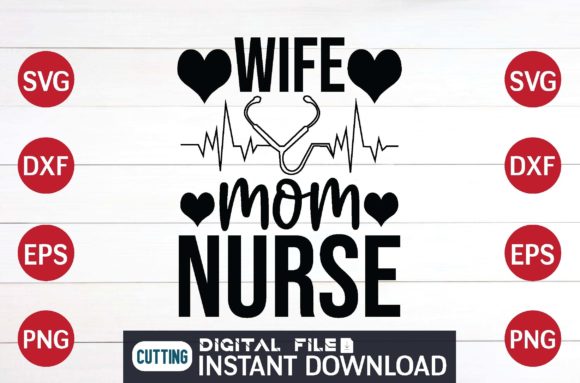
Wife Mom Nurse Cut File Design
When a design arrives in my studio, I don’t look at it as a flat graphic. I imagine it stitched onto a warm hoodie, pulled over a scrub top, or peeking out of a well-loved tote bag. The Wife Mom Nurse Cut File Design landed on my screen with that exact kind of instant project clarity. It’s one of those concepts that makes you stop scrolling and think, “I know exactly who needs this.” From a seasoned embroidery digitizer’s eyes, the marriage of strong typography and layered identity is what gives this piece its backbone. It’s not just a quote; it’s a three-part role statement that will resonate with a massive audience of makers and buyers.
First Reaction: The Mood of This Design
The composition carries a sense of pride without being loud. The words “Wife,” “Mom,” and “Nurse” are stacked in a way that feels balanced and deliberate. The accompanying phrase “Never Underestimate A Nurse” anchors the entire message with quiet ferocity. I see a lot of medical-themed artwork in the craft space, and many lean too clinical or cartoonish. This one avoids that trap. It has a modern, confident personality that would work equally well on a tote bag, a cozy sweatshirt, or a framed hoop art piece. The typeface suggests a blend of script and bold print, which immediately tells me that digitizing will need careful attention to letter connections and stroke widths, especially in smaller sizes.
Where It Belongs in Real Embroidery Projects
I wouldn’t hesitate to put this design into a lineup of boutique gift items. The natural home for it is on a canvas tote, a long-sleeve tee, a zip-up hoodie, a pillow cover, or even a kitchen towel for a nurse who loves to bake after a long shift. It’s also a strong candidate for a personalized patch, an apron, or a cap. The phrase “Never Underestimate A Nurse” is broad enough to apply to student nurses, retired nurses, and nursing assistants alike, so the gift potential is wide. For a small business owner selling at craft fairs or on Etsy, this design brings instant emotional connection. A customer sees it and immediately pictures their wife, mom, or best friend wearing it. That’s the kind of product recognition that turns a browsing shopper into a buyer.
The Tote Bag Test: A Nurse Mom’s Everyday Carry
Let me walk you through a real scenario I had in mind. I was preparing a custom batch of embroidered tote bags for a local hospital’s Nurses Week celebration. The client wanted something personal, not generic. I pulled up the Wife Mom Nurse Cut File Design and tested it on a medium-weight cotton canvas tote. I scaled the design to about six inches wide, which fit comfortably on the front pocket. After digitizing, I ran a sample stitch on a scrap piece of the same canvas. The lettering held up beautifully with a tight satin stitch, and the overall shape had a crisp, professional finish. The client loved it because it recognized the nurse’s whole identity—not just her job, but her family roles too. That’s the kind of reaction you can expect from this design. It’s not just a craft item; it’s a personal statement.
Thread Choices and Fabric Pairings That Matter
On a light natural canvas, I used a deep navy thread for the main text and a subtle teal accent for the decorative elements. The contrast was sharp, and the stitches popped. If you’re working on a dark fabric like a charcoal sweatshirt, you’ll want to flip the colors—maybe a bright white or a soft gold thread. Always test thread color on the actual fabric before committing to a full run. I’ve seen bold designs get lost on a textured knit just because the thread blended too much. For baby items or nursery decor, a soft blush or light gray thread on a white onesie can turn this design into a heartfelt gift for a new mom who’s also a nurse. The scale matters too. On a baby bodysuit, keep the design under four inches wide to avoid distorting the tiny details.
The Small Details That Can Make or Break a Project
When I inspect a cut file like this one, I’m looking for potential trouble spots in the embroidery conversion. The phrase “Never Underestimate A Nurse” likely has some smaller text that could close up if the stitch density is too high. I recommend using a fine running stitch for the thinnest parts and a satin stitch for the bolder letters. If there are decorative flourishes or connecting lines, those need to be wide enough to survive a few wash cycles. I always check the design in a black-and-white preview to see if the contrast holds up without color. It’s a quick trick that reveals whether the design relies too much on color to be readable. This one passed that test easily. The shape itself is recognizable even in silhouette, which is a hallmark of a well-built graphic.
When to Use This Design with Extra Caution
Not every fabric or product is a good match. I’d be careful with highly stretchy performance fabrics unless you’re using a heavy cutaway stabilizer and a topping to prevent the letters from sinking into the nap. On a curved cap surface, the design’s width might need to be reduced, and you’ll want to check that the center text doesn’t distort near the seam. Very small hoop sizes, like a 4x4, could force you to scale the design down to a point where the fine lines become messy. I’d keep this design at least 3.5 inches wide for embroidery to maintain clarity. For a patch, a merrow border can add a nice finished edge, but you’ll need to leave enough margin around the design for the border to attach cleanly.
Why This Design Speaks to Buyers
From a branding perspective, the Wife Mom Nurse Cut File Design hits a sweet spot. It’s inclusive, empowering, and highly giftable. When a customer searches for a mother’s day gift, a nurse graduation present, or a just-because surprise for a hardworking spouse, this design pops up with immediate emotional weight. It tells a story in three words. That’s powerful for repeat sales and positive reviews. I’ve noticed that designs with layered identities often perform better because they aren’t one-dimensional. They invite the buyer to see themselves in the product. That’s exactly what you want in a handmade shop or a digital product listing.
Practical Embroidery Designer Notes for a Flawless Finish
Here’s what I’d recommend to any embroiderer or small business owner before they stitch this out:
- Test on scrap fabric first. Always run a sample on the same material and stabilizer you’ll use for the final product.
- Check thread color contrast. Hold the thread spool against the fabric in natural light. Make sure the text is readable at arm’s length.
- Review stitch density. If you’re digitizing from the SVG or EPS file, adjust the density for the fabric type. High density on a thin knit can cause puckering.
- Confirm hoop size. Measure the design’s actual stitch area. A 5x7 hoop is a safe bet for most placements, but always verify.
- Inspect small details. Look at the lettering loops and dots. If they’re too fine, they might disappear under thread.
- Test black-and-white mockups. This shows you if the design holds its shape without relying on color.
- Use proper stabilizer. For a tote bag, a medium-weight cutaway works well. For a sweatshirt, add a water-soluble topping to prevent the stitches from sinking.
- Consider the product’s end use. If it’s a baby item, use soft, low-density fills and avoid any rough edges.
Licensing and Commercial Use: What to Confirm
The product description says this is a Print Ready SVG, PNG, EPS, DXF, PDF digital download. That means you’re getting a cut file, not a pre-digitized embroidery file. You’ll need to digitize it yourself or hire a professional to convert it into a machine embroidery format like PES, DST, or EXP. Before you sell finished items with this design, check the licensing terms from the original creator. Even though the words “Never Underestimate A Nurse” are a common phrase, the specific arrangement of the text and any decorative elements are part of the protected design. I always advise crafters to keep a copy of the license and clarify whether commercial use is allowed for physical products. If you plan to sell digital versions of the embroidered file, you need explicit permission. Most licenses for Graphics and Crafts downloads cover personal use and small business physical sales, but it’s your responsibility to verify.
Where This Design Shines in a Product Lineup
I see this design working beautifully across a coordinated product collection. Imagine a matching tote bag, a zippered pouch, and a keychain charm all featuring the same Wife Mom Nurse Cut File Design in different thread colors. That kind of set is a craft fair standout. For an Etsy seller, you could offer a bundle with a personalized touch—add the nurse’s name or a small heart icon. The design is versatile enough to adapt to a minimalist aesthetic with monochrome thread or a vibrant look with multicolored stitches. On a baby blanket, the scaled-down version becomes a sweet tribute to a new mom. On a tea towel, it’s a practical yet meaningful kitchen accent. The more I work with it, the more I appreciate its flexibility.
Final Thoughts from the Workbench
After spending real time evaluating this design, I’m confident it’s a strong addition to any embroidery catalog. It’s not just a graphic; it’s a connector. It links a person’s professional identity with their personal heart, and in the craft world, that’s gold. The Wife Mom Nurse Cut File Design has the clarity, emotional pull, and production-friendly structure that make it a reliable choice for handmade products, personalized gifts, and small shop merchandise. Just take the time to test your digitized version, choose the right fabric, and respect the licensing. When you do, the finished product will look like it was made with care—because it was.